 Masters
Best Mattress for Back Pain (2026 Guide)
In this guide
- What Makes a Mattress Good for Back Pain?
- Why the Wrong Mattress Causes Lower Back Pain
- Best Mattress Firmness for Back Pain
- Best Mattress Types for Back Pain Relief
- The Importance of Lumbar Support
- Choosing Based on Sleeping Position
- Durability and Long-Term Support
- Signs Your Mattress Is Causing Back Pain
- Final Thoughts
- Frequently asked questions
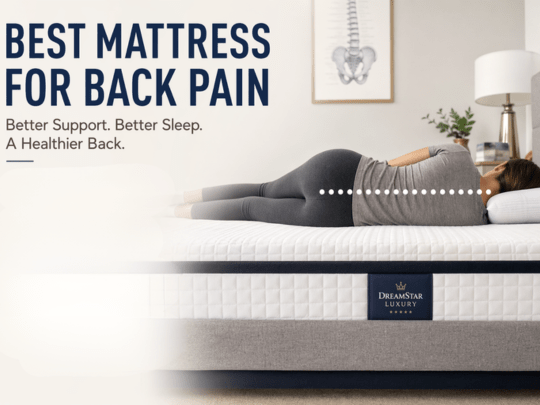
The best mattress for back pain is a medium-firm to firm hybrid with a zoned pocket-coil core and a contouring comfort layer: firm enough to stop the hips sinking, soft enough on top to fill the curve of the lower back. In our showroom the models that most often fix lower back pain are the Dreamstar Prestige Firm, the Beautyrest Centennial Tight Top Firm, and for heavier sleepers the Dreamstar Orthopedic Supreme Extra Firm. This guide explains why, how to adjust for your position and weight, and what to look for in any bed.
Key takeaways
- Back pain relief is about neutral spinal alignment, not maximum firmness.
- Medium-firm to firm suits most people; go firmer as body weight increases.
- Hybrids are the best overall type; latex hybrids for a responsive feel; dense memory foam hybrids for side sleepers with joint pain.
- Look for zoned lumbar support through the centre third of the bed.
- Durability matters: a bed that sags in year two brings the pain straight back.
Back pain is one of the most common reasons people start shopping for a mattress, and very often the mattress is a major contributor. A bed without the right balance of support and comfort holds your spine in an unnatural position for hours every night, which shows up as stiffness, tension and long-term discomfort. The fix is not simply the firmest option on the floor.
What Makes a Mattress Good for Back Pain?
A mattress that helps with back pain keeps the spine in its natural curve whether you sleep on your back, side or stomach. Even a small deviation puts stress on muscles and joints and shows up as morning pain.
Support is the foundation: a durable pocket-coil system or high-density foam core that holds the body in a stable position all night. Comfort layers above it cushion the pressure points so tension does not build at the hips, shoulders and lower back. The key is balance relative to your body weight: too soft and the hips sink; too firm and the surface pushes against you and leaves gaps.
Why the Wrong Mattress Causes Lower Back Pain
The lower back is especially sensitive to mattress quality because the midsection carries so much of your weight. On a bed without proper support the hips and lower back dip too far, the spine curves unnaturally and the lumbar region strains. On a bed that is too firm there is not enough contouring, which leaves a gap under the lower back and reduces support exactly where you need it.
Mattresses that have started to sag or soften unevenly make both problems worse. A bed that once felt perfect can quietly stop supporting you; our guide to why your back hurts in the morning covers the warning signs.
Best Mattress Firmness for Back Pain
For most people a medium-firm to firm mattress gives the ideal mix of support and comfort. Medium-firm allows slight contouring for pressure relief while keeping enough resistance to hold the spine level, which is why it is the recommended starting point. Two of our most popular choices for lower back pain are the Dreamstar Prestige Firm and the Beautyrest Centennial Tight Top Firm.
Body weight always comes into it. The heavier you are, the more a soft comfort layer compresses, so the firmer the mattress needs to be to prevent excessive sinkage. For heavier sleepers we strongly recommend the Dreamstar Orthopedic Supreme Extra Firm. Lighter sleepers can usually stay at medium-firm. Every mattress on our site shows a firmness rating out of 10; see our firmness guide for how to read it.
Best Mattress Types for Back Pain Relief
Hybrid mattresses: the best overall choice
A hybrid pairs a pocket-coil support system with foam or latex comfort layers. The coils provide strength, durability and zoning; the comfort layers relieve pressure. That combination is the most reliable way to maintain spinal alignment, which is why hybrids top this list.
Memory foam
High-quality memory foam adapts to the body, spreads weight evenly and reduces pressure points, a real benefit for side sleepers and people with joint pain. It must be dense and supportive, though; low-density foam lacks the structure the back needs. We recommend memory foam over coils rather than an all-foam bed.
Organic latex
Latex feels responsive and buoyant: consistent support without the sinking sensation of memory foam, and exceptional durability, which matters when you are managing back pain over years, not months.
The Importance of Lumbar Support
The lumbar spine curves inward, and a good mattress supports that curve rather than flattening or exaggerating it. Many modern mattresses use zoned support, with firmer coils or foam through the centre third, to keep the hips from sinking and the lower back supported. If lower back pain is an ongoing issue, zoning is the single feature most likely to change how you feel in the morning.
Choosing Based on Sleeping Position
| Position | What you need | Firmness | Starting point |
|---|---|---|---|
| Side | Pressure relief at shoulders and hips with good contouring | Medium to medium-firm | Dreamstar Midnight Comfort, Organic Meadow Medium |
| Back | Support for the lumbar curve without hips sinking | Medium-firm to firm | Prestige Firm, Centennial Tight Top Firm |
| Stomach | A firm surface to prevent midsection sinkage | Firm to extra-firm | Orthopedic Supreme, Dreamshadow Extra Firm |
Durability and Long-Term Support
A mattress that feels right on day one but sags within a year brings the pain straight back. High-density foams, reinforced coil systems and quality construction keep the support consistent for years, and that matters most for heavier bodies, which accelerate wear in cheaper materials. The Dreamstar Double Life Copper Hybrid Firm is a standout here: excellent lumbar support and a two-sided flippable build rated for 20 years, one of the most durable mattresses on the market.
Tell us where it hurts, how you sleep and your weight range. Our team will reply within a day with the models to try.
Signs Your Mattress Is Causing Back Pain
- You wake up stiff or sore, especially in the lower back, and the pain eases as the day goes on.
- Visible sagging, indentations or an uneven surface.
- You sleep better in a hotel or guest bed.
- The mattress is more than 7 or 8 years old. See how often to replace your mattress.
Final Thoughts
Finding the best mattress for back pain comes down to the right balance of support and comfort: a bed that keeps your spine aligned, supports your lower back and relieves pressure points can change how you feel every day. All of the models above are on the floor in our North York showroom, with free GTA delivery and a 100-night sleep trial, and our team is happy to help you compare them in person.
Frequently asked questions
Is a firm or soft mattress better for back pain?
Medium-firm to firm for most people. A soft mattress lets the hips sink and strains the lower back; an extra-firm one leaves a gap under the lumbar curve. Heavier sleepers should go firmer, lighter sleepers slightly softer.
What mattress do chiropractors recommend for lower back pain?
Typically a medium-firm mattress with a supportive, zoned core, most often a pocket-coil hybrid, that keeps the spine neutral while cushioning the hips and shoulders.
Can a new mattress fix back pain?
If the pain is mechanical and worst in the morning, very often yes. Most customers notice a difference within a week or two. Pain that persists all day or radiates into a leg should be assessed by a doctor.
Is memory foam or spring better for back pain?
A combination: pocket coils for support with dense memory foam or latex on top. All-foam beds can lack structure; old-style connected springs lack contouring.
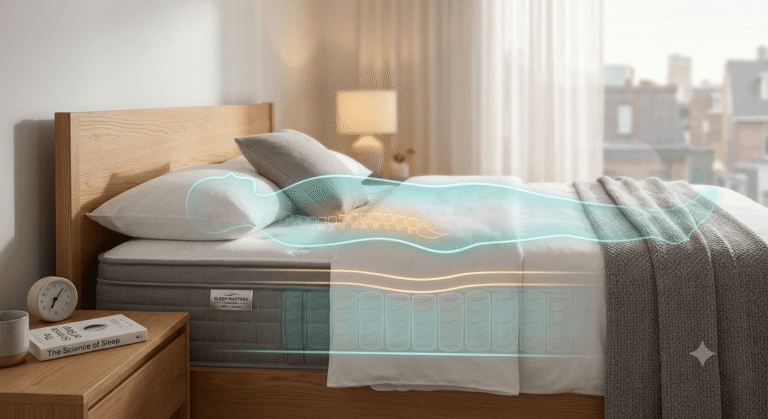 Back & Pain ReliefWhy Your Back Hurts in the Morning: The Ultimate Canadian Mattress Guide for Pain ReliefOct 8, 2026 · 7 min read
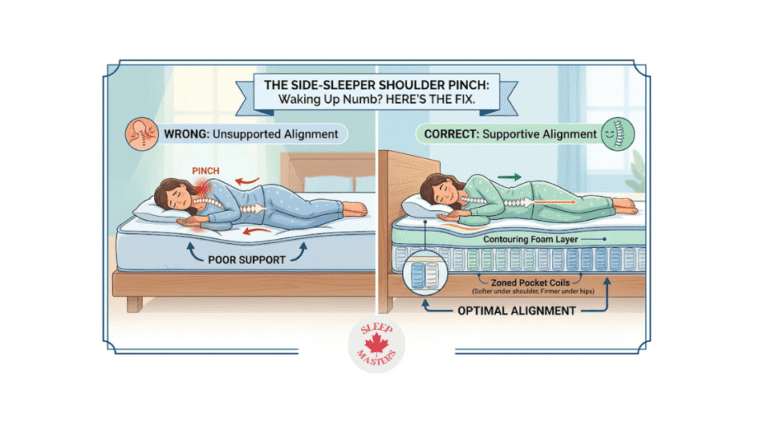 Back & Pain ReliefThe Side-Sleeper Shoulder Pinch: Why Your Mattress Is Numbing Your Arms (And How to Fix It)Oct 8, 2026 · 6 min read
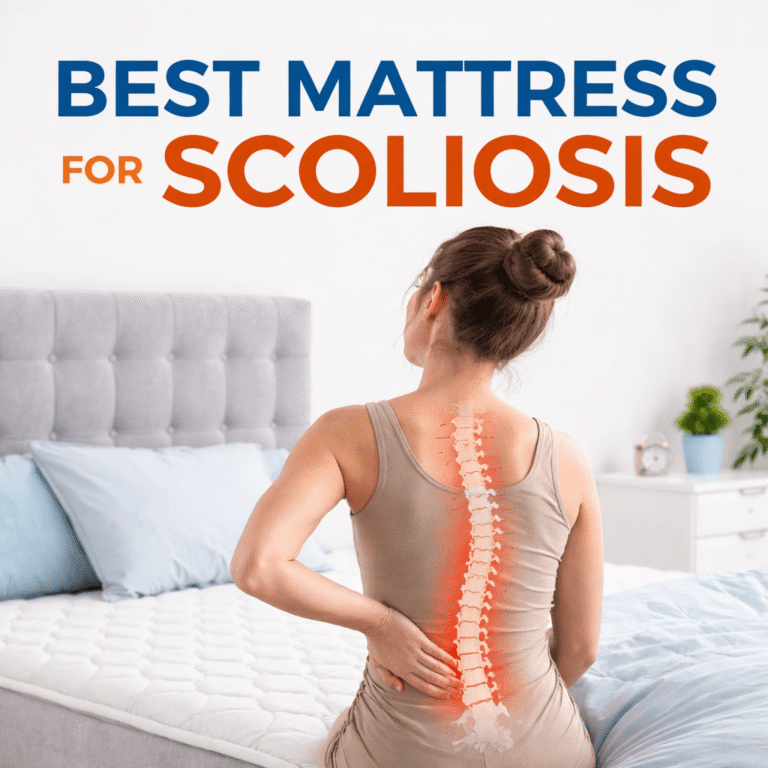 Back & Pain ReliefThe Best Mattress for People with Scoliosis: A Complete GuideOct 8, 2026 · 5 min read