
 Serta
Serta Simmons BeautyRest®
 Sealy Mattresses
 Dreamstar Mattresses
 Pocket Coil
 Memory Foam
 Pillow-Top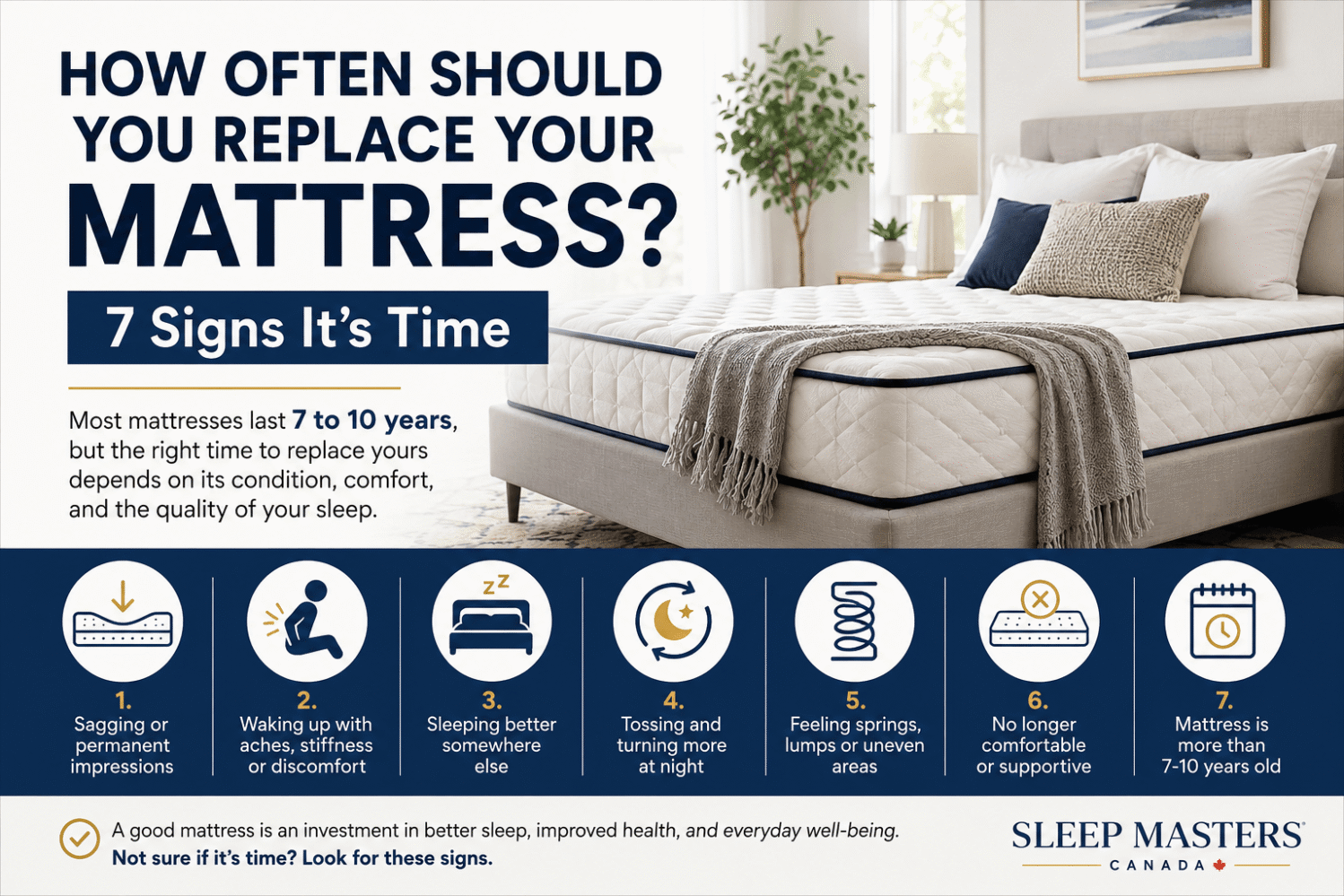
How Often Should You Replace Your Mattress
Wondering how often you should replace your mattress? Most mattresses typically last around 7 to 10 years, but there is no universal expiration date. The right time to replace a mattress depends on its construction, material quality, how frequently it is used, the weight and sleeping habits of the people using it, and how well it has been maintained.
More importantly, you don’t necessarily need to wait until your mattress is 7 or 10 years old to replace it. If your mattress is sagging, causing you to wake up sore, no longer feels comfortable, or is interfering with your sleep, it may be time for a new one.
In this guide, we’ll explain how long mattresses typically last, the seven most important signs that your mattress needs replacing, what affects mattress lifespan, and how to get more years out of your current mattress.
Quick Answer: How Often Should You Replace a Mattress?
As a general guideline, you should consider replacing your mattress every 7 to 10 years. However, some mattresses may need to be replaced sooner, while higher-quality mattresses made with durable materials can last longer.
For example, the average lifespan can vary considerably depending on construction:
- Foam Based Mattresses: approximately 6–8 years
- Hybrid Mattresses: approximately 8–10 years
- Two Sided Flippable Mattresses: 15+ years, depending on the quality and construction
These are general estimates rather than guarantees. A high-quality mattress that is properly supported and maintained may last significantly longer than a lower-quality mattress that receives heavy nightly use.
The most important question isn’t simply “How old is my mattress?” It’s “Is my mattress still providing the comfort and support I need?”
Current mattress research similarly emphasizes that lifespan varies by materials, construction, body weight, sleeping position, maintenance, and frequency of use.
7 Signs It’s Time to Replace Your Mattress
If you’re unsure whether your mattress needs replacing, look for these seven warning signs.
1. Your Mattress Is Sagging or Has Permanent Body Impressions
One of the clearest signs that a mattress is reaching the end of its useful life is visible sagging.
Over time, the materials inside a mattress can soften and lose their ability to return to their original shape. You may begin to notice:
- A visible dip where you normally sleep
- Permanent body impressions
- A “hammock” feeling when lying down
- Your hips sinking lower than the rest of your body
- Uneven support across the mattress
- A noticeable ridge or depression in the centre of the bed
A small amount of softening over time is normal. However, significant or permanent sagging can change the way your body is supported while you sleep.
This is particularly important if you wake up feeling as though you are “stuck” in the mattress or if you frequently need to change positions to find a comfortable spot.
If your mattress has developed a noticeable permanent indentation or sag, it may be time to replace it.
2. You Wake Up With More Aches, Stiffness or Discomfort
If you regularly wake up with back, neck, shoulder or hip discomfort, your mattress may no longer be providing the support and pressure relief your body needs.
As mattresses age, comfort layers can soften and support materials can lose their resilience. This can cause your body to sink differently than it did when the mattress was new.
For example:
- Side sleepers may experience increased pressure around the shoulders and hips.
- Back sleepers may notice that their midsection sinks too deeply.
- Stomach sleepers may feel that their hips are sinking excessively.
- Combination sleepers may find it increasingly difficult to find a comfortable position.
A mattress should allow your body to feel supported without creating excessive pressure in sensitive areas.
Of course, waking up sore can have many causes, so a mattress isn’t necessarily the only explanation. However, if new or increasing discomfort consistently occurs after sleeping and your mattress is several years old, it’s worth evaluating whether the mattress is still right for you.
Research and mattress guidance commonly identify morning stiffness, aches and reduced support as important signs that a mattress may need replacing.
3. You’re Sleeping Better Somewhere Else
Here’s a surprisingly useful test:
Do you sleep better somewhere other than your own bed?
If you consistently find yourself sleeping more comfortably at:
- A hotel
- A friend’s house
- A guest room
- A cottage
- A different bed while travelling
your mattress may be contributing to poor sleep.
This doesn’t necessarily mean the mattress you slept on elsewhere was objectively “better.” It may simply have been better suited to your current comfort and support preferences.
It’s also easy to become accustomed to an aging mattress. You may not immediately recognize that it has gradually become less supportive because you’ve experienced the change slowly over several years.
If you consistently wake up feeling better after sleeping somewhere else, it may be worth taking a closer look at your mattress.
4. You’re Tossing and Turning More at Night
Another potential warning sign is that you have become noticeably more restless at night.
You may find yourself:
- Constantly changing positions
- Flipping from your back to your side
- Moving around to find a comfortable area
- Waking up several times
- Struggling to get comfortable before falling asleep
- Feeling tired despite spending enough time in bed
An aging mattress can lose some of its ability to balance comfort and support, making it harder to settle into a comfortable sleeping position.
However, sleep quality is influenced by many factors, including stress, temperature, caffeine, bedroom environment and lifestyle. A mattress isn’t automatically the cause of poor sleep.
But if your sleep has declined and your mattress is older or visibly worn, it’s worth considering whether your mattress is contributing to the problem.
5. You Can Feel Springs, Lumps or Uneven Areas
A mattress should provide a relatively consistent sleeping surface.
If you can feel:
- Individual springs or coils
- Hard spots
- Lumps
- Uneven areas
- Broken or damaged components
- Excessive movement from the support system
your mattress may be deteriorating.
This can happen when the comfort materials above the support core have broken down or when the underlying support system has become damaged.
For traditional innerspring mattresses, noisy or damaged springs can also be an indication that the mattress is reaching the end of its useful life.
If your mattress is still under warranty, check the manufacturer’s warranty terms before replacing it. Some structural defects may qualify for warranty service or replacement.
6. Your Mattress Is No Longer Comfortable or Supportive
This may sound obvious, but it’s one of the most important signs.
Your mattress doesn’t have to look completely worn out to be ready for replacement.
Your body, lifestyle and preferences can change over time.
For example, you may have:
- Gained or lost weight
- Started sleeping in a different position
- Developed a preference for a softer or firmer feel
- Started sharing your bed with a partner
- Started sleeping with a pet
- Experienced changes in your daily activity level
- Become more sensitive to pressure
- Started sleeping hotter than you used to
A mattress that was perfect for you eight years ago may no longer be the best choice today.
This is particularly important for couples. A mattress needs to accommodate both people’s body types, sleeping positions and comfort preferences, which can change over time.
If you regularly think, “This mattress just isn’t comfortable anymore,” don’t ignore that feeling simply because the mattress doesn’t look damaged.
Comfort and support are two of the most important reasons to replace a mattress.
7. Your Mattress Is More Than 7–10 Years Old
Age alone doesn’t necessarily mean that your mattress needs to be replaced.
However, once a mattress reaches the 7–10 year range, it’s a good idea to evaluate its condition carefully.
Ask yourself:
- Does it still feel comfortable?
- Does it still provide adequate support?
- Is there visible sagging?
- Do you wake up feeling stiff or uncomfortable?
- Are you sleeping well?
- Does your partner’s movement disturb you more than it used to?
- Does the mattress look or feel significantly different from when you bought it?
- Do you sleep better on other mattresses?
If you answer “yes” to several of these questions, it may be time to start shopping for a replacement.
On the other hand, a well-maintained, high-quality mattress that is still comfortable and supportive may continue to perform well beyond the general replacement window.
Think of 7–10 years as a guideline, not an expiration date.
How Long Do Different Types of Mattresses Last?
The construction and materials used inside a mattress have a major impact on how long it can last.
Pocket Coil/Hybrid mattresses
A pocket coil or hybrid mattress is usually the construction that we recommend for most people. The longevity of a pocket coil or hybrid mattress can vary quite a bit depending on the quality of materials used. In general, a good quality hybrid mattress should last somewhere between 10-12 years.
Memory Foam Mattresses
At Sleep Masters Canada, we have nothing against memory foam mattresses, but we have to say that we’re not too keen on completely foam based memory foam mattresses. When combined with pocket coils, we absolutely love them! However, a completely foam based memory foam type mattress, tends not to be a great choice for most people. They also don’t do as well as hybrid mattresses with longevity, with most needing to be replaced approximately within 6-8 years.
Latex Mattresses
Although we’re not huge fans of completely foam based mattresses, if it is made using organic latex, we actually don’t mind them! At Sleep Masters Canada we would still much prefer a hybrid organic latex mattress over a foam based organic latex mattress, but they’re still great, and tend to last 8-10 years.
Flippable Mattresses
Now here is where the game completely changes. With a high quality, hybrid and two sided flippable mattress, you can expect your mattress to last 20+ years. Of course, not every flippable mattress is automatically super durable, but at Sleep Masters Canada, we have many high quality flippable mattresses that are guaranteed to last a minimum of 20 years.
What Factors Affect How Long a Mattress Lasts?
Two people can buy similar mattresses at the same time and have very different experiences with longevity.
Several factors influence how quickly a mattress wears out.
Mattress Quality
The quality of the materials and construction plays a major role.
A mattress made with durable, high-quality components is generally better equipped to withstand years of nightly use.
This is one reason it’s important to look beyond the price tag when comparing mattresses.
Body Weight and Weight Distribution
A mattress supporting one lightweight sleeper will generally experience less wear than a mattress supporting two heavier sleepers every night.
The way weight is distributed also matters.
Side sleepers, for example, place significant pressure around the shoulder and hip areas, while stomach and back sleepers distribute their weight differently.
Sleeping Position
Your sleeping position can influence where a mattress experiences the most pressure.
Side sleepers may notice wear around the shoulder and hip areas, while other sleepers may notice more pronounced impressions around the hips or midsection.
Number of Sleepers
A mattress used by one person may experience less wear than the same mattress used every night by two adults.
Couples also place additional demands on a mattress because of the combined weight and movement.
Children and Pets
If children or pets regularly sleep on your mattress, the mattress experiences additional weight and movement.
Accidental spills and stains can also affect the condition of the mattress over time.
Mattress Maintenance
Proper care can help preserve a mattress.
Depending on the manufacturer’s instructions, this can include:
- Using a quality mattress protector
- Rotating the mattress when recommended
- Using the correct foundation or bed frame
- Keeping bedding clean
- Addressing spills promptly
- Following the manufacturer’s care instructions
Not every mattress should be rotated, particularly mattresses with specific zoned constructions. Always follow the manufacturer’s recommendations before rotating or flipping your mattress.
Can a Mattress Topper Make an Old Mattress Last Longer?
Sometimes.
A mattress topper can temporarily improve the comfort of a mattress that has become slightly too firm or uncomfortable.
However, a topper cannot permanently repair a mattress with serious structural problems.
If your mattress has significant:
- Sagging
- Broken coils
- Permanent indentations
- Structural damage
- Severe loss of support
a topper may only mask the problem temporarily.
If your mattress is structurally sound but you simply want to change the comfort level, a quality topper may be worth considering.
If the underlying mattress is no longer providing adequate support, replacing the mattress is generally the better long-term solution.
How to Make Your Mattress Last Longer
Buying a quality mattress is only part of the equation. Proper maintenance can help protect your investment.
1. Use a Mattress Protector
A quality mattress protector can help protect against spills, stains, moisture and everyday wear.
2. Use the Correct Foundation
Your mattress should be placed on a foundation or bed frame that meets the manufacturer’s requirements.
An unsuitable foundation can affect how the mattress performs and may potentially contribute to premature wear.
3. Rotate When Recommended
Some mattresses benefit from regular rotation, but not every mattress should be rotated.
Follow the manufacturer’s instructions for your specific mattress.
4. Keep Your Mattress Clean
Wash your bedding regularly and use a mattress protector to help keep the mattress cleaner.
5. Avoid Jumping on the Mattress
Mattresses are designed to support sleeping bodies—not repeated jumping or concentrated impacts.
6. Address Spills Quickly
If something spills on your mattress, follow the manufacturer’s cleaning recommendations and address it as soon as possible.
7. Check Your Bed Frame
Make sure your bed frame and foundation continue to provide proper support.
A mattress may be perfectly healthy while the foundation underneath it has become damaged or inadequate.
How Do You Know What Mattress to Buy Next?
If you’ve decided it’s time for a new mattress, don’t automatically buy the same type of mattress you had before.
Your needs may have changed.
Start by considering:
Your Sleeping Position
Are you primarily a:
- Side sleeper?
- Back sleeper?
- Stomach sleeper?
- Combination sleeper?
Your sleeping position can influence how much pressure relief and support you need.
Your Preferred Firmness
Do you prefer:
- Plush?
- Soft?
- Medium?
- Medium-firm?
- Firm?
Don’t assume that a firm mattress is automatically more supportive. Support and firmness are not the same thing.
A mattress can provide strong underlying support while still having a comfortable, pressure-relieving surface.
Your Body Type
Your weight and body shape influence how deeply you interact with the comfort layers of a mattress.
A mattress that feels firm to one person may feel medium or even soft to someone else.
Your Partner’s Preferences
If you’re shopping as a couple, consider both people’s sleeping positions, body types and comfort preferences.
Motion isolation and edge support may also become more important when sharing a bed.
Temperature
If you tend to sleep hot, consider mattress construction and airflow.
Pocket coil and hybrid designs can offer more airflow than dense all-foam constructions, while latex and specialized cooling materials can also be worth considering.
When Should You Replace Your Mattress? A Simple Checklist
If you’re still unsure, use this quick checklist.
Consider replacing your mattress if:
☐ It is more than 7–10 years old
☐ It has visible sagging or permanent body impressions
☐ You wake up with more aches or stiffness than you used to
☐ You frequently toss and turn trying to get comfortable
☐ You sleep better on other mattresses
☐ You can feel springs, lumps or damaged areas
☐ The mattress no longer feels supportive
☐ Your partner’s movements disturb you more than they used to
☐ Your comfort preferences or sleeping position have changed
☐ The mattress simply doesn’t feel comfortable anymore
If you’ve checked several boxes, it’s probably time to start exploring your options.
Frequently Asked Questions About Replacing a Mattress
How often should you replace your mattress?
Most mattresses should be considered for replacement approximately every 7 to 10 years, but the exact lifespan depends on the mattress construction, material quality, usage and maintenance. A mattress should be replaced sooner if it develops significant sagging, loses support, becomes uncomfortable or negatively affects your sleep.
What are the signs that you need a new mattress?
The most common signs include sagging, permanent body impressions, waking up sore or stiff, poor sleep, increased tossing and turning, noisy or damaged components, and a noticeable loss of comfort or support.
Is a 10-year-old mattress too old?
Not necessarily, but a 10-year-old mattress should be evaluated carefully. If it remains comfortable, supportive and free from significant wear, it may still be usable. However, if it has developed sagging, discomfort or reduced support, replacing it is worth considering.
Can a mattress last 15 years?
Some high-quality mattresses, particularly certain hybrid latex or two sided flippable mattresses, may last 15 years or longer under favourable conditions. However, lifespan varies considerably by materials, construction, usage and maintenance, so a 15-year-old mattress should be evaluated based on its actual condition rather than age alone.
Does a more expensive mattress last longer?
Not automatically. Price alone does not determine durability. However, mattresses constructed with higher-quality, more durable materials may be better equipped to withstand long-term use.
Can rotating a mattress make it last longer?
Rotating a mattress when recommended by the manufacturer can help distribute wear more evenly. However, some mattresses—including certain zoned designs—should not be rotated. Always check the manufacturer’s instructions first.
Is a mattress topper a good alternative to replacing a mattress?
A topper can improve the comfort of a mattress that is still structurally sound, but it cannot repair serious sagging, damaged coils or significant loss of support. If the mattress itself is worn out, replacement is generally the better long-term option.
Looking for a New Mattress in Toronto?
If you’ve noticed several of the signs above, the team at Sleep Masters Canada can help you find a mattress based on your individual sleeping position, comfort preferences, support needs and budget.
We carry a wide selection of memory foam, hybrid, pocket coil, latex, pillowtop and Canadian-made mattresses, with options for different sleeping styles and comfort preferences.
Not sure which mattress is right for you? Visit our Toronto showroom and try different mattress feels in person, or use our mattress selector and we will provide you with our best personalized recommendation.
A better night’s sleep starts with the right mattress.