 Masters
How to Get a Better Sleep With Back Pain

In this guide
Back pain and poor sleep feed each other: pain keeps you awake, and short sleep lowers your pain threshold the next day. Breaking the cycle means working on both sides at once. Sleep on your side with a pillow between the knees or on your back with one under them, keep caffeine and alcohol away from bedtime, wind down the same way every night, and make sure the mattress keeps your spine level for your body weight. Here is how to do each, and when to see a doctor.
Key takeaways
- About 8 in 10 people experience back pain at some point, and it disrupts sleep as much as it disrupts the day.
- Pain and poor sleep are a two-way street; improving sleep reduces pain sensitivity.
- Best positions: side with a knee pillow, or back with a pillow under the knees. Avoid stomach sleeping.
- A medium-firm mattress matched to your weight keeps the spine aligned; too soft or too hard both hurt.
- Persistent, radiating or night-waking pain needs a medical diagnosis.
The lower back carries much of your body weight through everything you do: standing, sitting, walking and lying down. It is no surprise that it is where pain shows up most, from a sudden sharp twinge to a nagging ache that lasts months. And it does not clock off at bedtime. Understanding the link between sleep and back pain is the first step to getting relief.
What Causes Back Pain?
- Excess weight adds load to the spine and is linked to sleep-disrupting conditions such as sleep apnea.
- Age. Natural changes in the discs and joints make back pain more common from the 30s and 40s onward.
- Stress, anxiety and low mood raise pain sensitivity and disturb sleep, which raises sensitivity further.
- Spine problems: bulging or slipped discs that compress nerves; degenerative disc disease, where thinning discs let vertebrae rub; osteoarthritis of the spine; compression fractures from osteoporosis.
- Muscle or ligament strain from poor lifting or awkward movement.
- Accidents and injuries such as falls or car accidents.
Identifying the cause matters, because the right fix for a strained muscle is different from the right fix for a disc problem. A physician or physiotherapist can tell you which you have.
Why Sleep Matters for Back Pain
Research consistently shows the relationship runs both ways. Back pain makes it harder to fall asleep and causes night-time waking; sleep deprivation, in turn, makes you more sensitive to pain and slows tissue recovery. Good sleep is therefore not just a comfort but a treatment: people who sleep well are less likely to develop back pain and recover faster when they have it. That makes sleep posture, bedding and a wind-down routine part of the plan, alongside whatever your doctor recommends.
How to Get Better Sleep With Back Pain
1. Optimize your sleeping position
For lower back pain, sleep on your side with the knees slightly bent and a pillow between them; this balances the pelvis and takes pressure off the lumbar spine. If you prefer your back, put a pillow under the knees to support the natural curve. Stomach sleeping strains the back; if you cannot give it up, slide a thin pillow under the hips to limit the arch.
2. Limit alcohol and caffeine
Alcohol helps you fall asleep but fragments the second half of the night; caffeine lingers for six hours or more. With back pain you need every minute of deep, restorative sleep, so cut caffeine after noon and skip the nightcap. Our guide on why you wake at 3 a.m. explains what both do to sleep.
3. Minimize stress and stay active
Stress drives insomnia, and insomnia amplifies pain. Keep work out of the bedroom, wind down with gentle stretching or yoga, and stay physically active during the day; a strong core and back lower the risk of pain in the first place. If you have chronic pain, check with your doctor before starting a new routine.
4. Create a tranquil sleep environment
Pain makes it hard to get back to sleep after waking, so remove the things that wake you: blackout curtains against street light, earplugs or a fan against traffic, and a room around 18°C. Everything that reduces night-time waking is a win.
5. Keep a consistent bedtime routine
Go to bed and get up at the same times, including weekends, and follow the same short ritual before bed: shower, teeth, lights down, no screens for the last hour. The routine conditions your body for sleep and is part of good sleep hygiene, which matters even more during a flare-up.
Get the Right Mattress
The mattress is the one thing your back is in contact with for a third of the day. The best bed for back pain keeps the spine aligned and reduces pressure points, and that depends on your weight:
| Body weight | Recommended feel | Why |
|---|---|---|
| Under 130 lb | Medium-soft to medium | Lighter bodies need some give to get contouring and pressure relief |
| 130 to 200 lb | Medium-firm | The expert-recommended balance of support and comfort |
| 200 to 250 lb | Firm | Prevents sinking and keeps the hips level |
| Over 250 lb | Extra-firm hybrid | Maximum support for spinal alignment and durability |
Quality does not have to mean a high price: there are well-built hybrids with real pressure relief at reasonable prices, and our mattress sale often includes them. For specific models, see our best mattress for back pain guide.
When to See a Doctor
See a physician promptly if back pain follows an injury, radiates down a leg, comes with numbness, tingling or weakness, affects bladder or bowel control, wakes you from sleep, or lasts more than a few weeks despite rest and better sleep habits. These can signal a disc, nerve or structural problem that needs treatment beyond a better bed.
Tell us where it hurts, how you sleep and your weight range, and we will reply within a day with the mattresses to try.
Choosing a mattress that fits your body is one of the most effective things you can do for spinal health, and our team at Sleep Masters Canada is here to help. Visit our North York showroom to lie on the options, or call (416) 781-7441. Every mattress comes with free GTA delivery (up to 250 km) and a 100-night sleep trial.
Frequently asked questions
What is the best sleeping position for lower back pain?
On your side with a pillow between the knees, or on your back with a pillow under the knees. Both keep the spine in a neutral line and take load off the lumbar region.
Does lack of sleep make back pain worse?
Yes. Sleep deprivation lowers your pain threshold and slows recovery, which is why treating sleep is part of treating back pain.
Is a firm mattress better for back pain?
Medium-firm is best for most people. Firm and extra-firm suit heavier sleepers; for lighter and side sleepers a very firm bed creates pressure points and more pain.
Can stretching before bed help back pain?
Gentle stretching and yoga relax the muscles and lower stress, both of which help sleep. Avoid vigorous exercise in the two hours before bed.
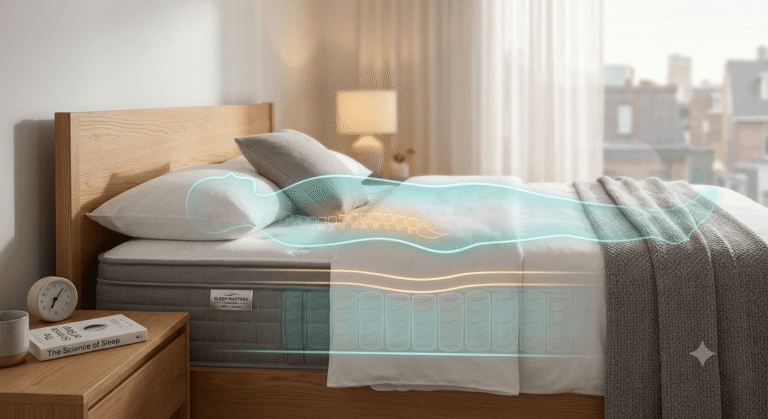 Back & Pain ReliefWhy Your Back Hurts in the Morning: The Ultimate Canadian Mattress Guide for Pain ReliefOct 28, 2026 · 7 min read
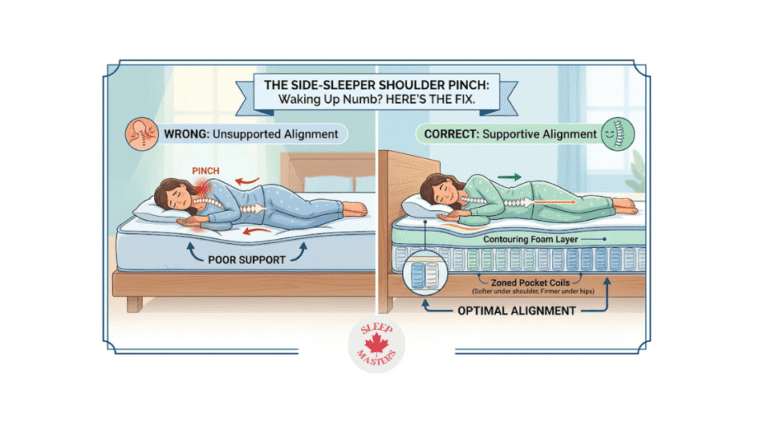 Back & Pain ReliefThe Side-Sleeper Shoulder Pinch: Why Your Mattress Is Numbing Your Arms (And How to Fix It)Oct 28, 2026 · 6 min read
 Back & Pain ReliefBest Mattress for Back Pain (2026 Guide)Oct 28, 2026 · 6 min read