 Masters
Is a Memory Foam Mattress Good for Kids?
In this guide
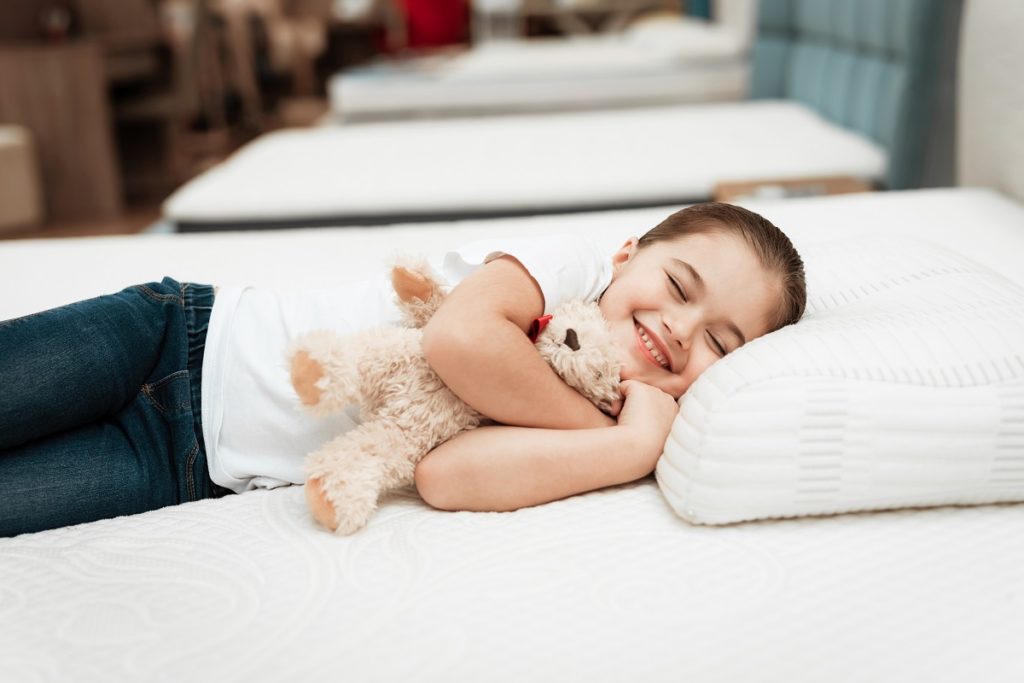
Yes, a memory foam mattress is a good choice for most children once they have moved out of a crib, as long as it is medium to medium-firm, made from certified low-emission foam, and paired with a waterproof protector. Memory foam supports a growing spine, resists dust mites and absorbs movement. It is not suitable for babies: infants must sleep on a firm, purpose-made crib mattress.
Key takeaways
- Babies under 12 months should sleep only on a firm, flat crib mattress that meets Health Canada requirements, never on soft memory foam.
- For toddlers and older kids, choose medium to medium-firm; very plush foam lets light bodies sink unevenly and can sleep warm.
- Look for CertiPUR-US or similar certified foam and a removable, washable cover.
- A waterproof protector is essential; spills and accidents are the main reason kids’ mattresses wear out early.
- A gel-infused memory foam or hybrid helps kids who sleep hot.
Is memory foam safe for children?
For children past the crib stage, yes. Modern certified memory foams are made without ozone depleters, heavy metals, formaldehyde or certain flame retardants, and tested for low emissions. The new-mattress smell from a bed-in-a-box fades within a few days; air the room well and let the mattress expand fully before your child sleeps on it.
Infants: Health Canada advises that babies sleep on their backs on a firm, flat, purpose-made crib mattress with nothing else in the crib. Do not use memory foam mattresses, toppers or pads for babies.
Benefits of memory foam for kids
Support for a growing spine
Children’s bodies change quickly. Medium-firm memory foam adapts to their shape at each stage while keeping the spine in a neutral line, which supports healthy posture and comfortable sleep.
Allergy-friendly
Dense foam gives dust mites fewer places to live than fibre-filled mattresses, and a zippered protector seals out allergens. This makes memory foam a good choice for kids with allergies or asthma.
Quiet, motion-absorbing sleep
Memory foam does not squeak, and it absorbs movement. For siblings sharing a room, or a child who tosses and turns, fewer disturbances mean more continuous sleep.
Durability
A quality memory foam mattress lasts 7 to 10 years, long enough to carry a child from their first big-kid bed into their teens. High-density foam holds up best against the inevitable bouncing.
Easy to move and set up
Many memory foam mattresses ship compressed in a box, which makes them easy to carry upstairs or up to a top bunk. See our guide to choosing a bunk bed for mattress thickness limits.
What to look for in a kids’ memory foam mattress
| Feature | Recommendation |
|---|---|
| Firmness | Medium to medium-firm |
| Thickness | 8–10 in for a standard bed; 6–8 in for a top bunk |
| Foam certification | CertiPUR-US or equivalent low-emission certification |
| Cover | Removable and washable |
| Cooling | Gel-infused foam or a hybrid with pocket coils |
| Size | Twin for most kids; full if you want it to last into the teens |
| Protection | Waterproof, breathable protector from night one |
Memory foam vs. other options for kids
Pocket coil and hybrid mattresses are also excellent for children: they sleep cooler, have firmer edges for sitting, and often cost about the same. Memory foam’s advantages are quieter sleep, motion isolation and easier delivery. If your child runs hot or likes to sit on the edge of the bed, a hybrid may suit them better. For more, read memory foam vs. pocket coil.
Our recommendations for kids
The Dreamstar Cool Breeze is our most popular choice for children: gel-infused memory foam, a medium-firm feel, a compressed delivery that is easy to carry, and it is made in Canada.
Answer five quick questions and the Mattress Selector will suggest the right size and firmness, or visit our North York showroom so your child can try a few.
Frequently asked questions
At what age can a child sleep on a memory foam mattress?
Once they have moved from a crib to a toddler or twin bed, usually between 18 months and 3 years. Babies under 12 months should only sleep on a firm, purpose-made crib mattress.
What firmness is best for kids?
Medium to medium-firm. Children are light, so a very soft mattress does not support them evenly. Firmer surfaces support a growing spine and hold up better to play.
Do memory foam mattresses make kids too hot?
Traditional dense foam can. Choose gel-infused memory foam or a hybrid with pocket coils, and breathable cotton sheets.
What size mattress should I buy for my child?
A twin suits most children. A full (double) gives growing kids and teens more room and can last until they leave home.
Is the smell from a new memory foam mattress harmful?
Certified low-emission foams release very low levels of compounds that dissipate within a few days. Let the mattress air out in a ventilated room before first use.