 Masters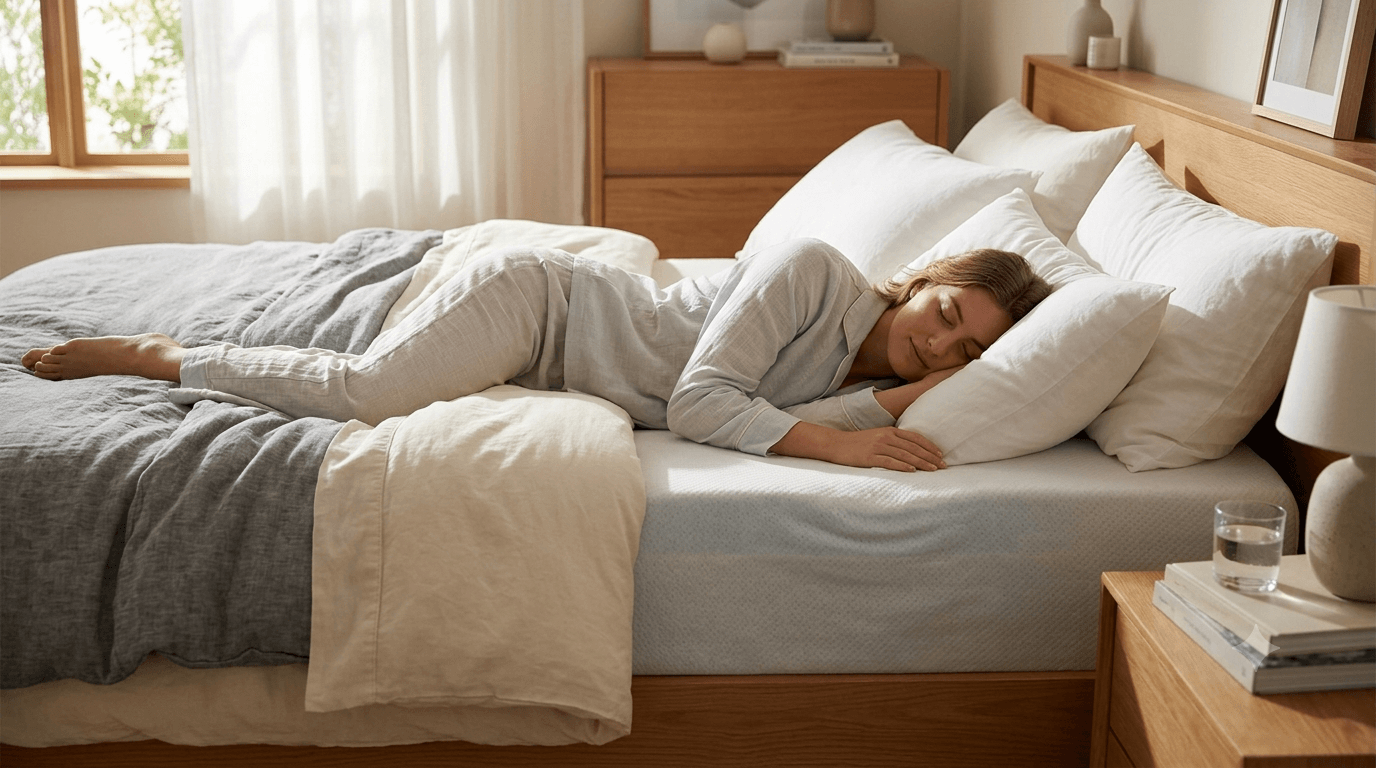
Is Memory Foam Good for Side Sleepers?
Quick Answer
Yes, memory foam is often an excellent choice for side sleepers because it conforms closely to the body’s curves, helping relieve pressure on the shoulders and hips. By evenly distributing body weight, memory foam can reduce pressure points, improve spinal alignment and help side sleepers wake up with less discomfort.
However, not all memory foam mattresses are created equal. The best memory foam mattress for side sleepers should provide a balance of pressure relief and support, ensuring that the shoulders and hips can sink in comfortably without allowing the body to sag too deeply.
Why Mattress Choice Matters for Side Sleepers
Side sleeping is one of the most popular sleep positions, but it places more pressure on certain parts of the body than back or stomach sleeping.
When sleeping on your side, most of your body weight is concentrated on two areas:
- Shoulders
- Hips
If a mattress is too firm, these areas can experience excessive pressure, leading to discomfort, numbness and poor sleep quality.
If a mattress is too soft, the hips can sink too deeply, causing spinal misalignment and lower back pain.
The ideal mattress for side sleepers should:
- Cushion the shoulders and hips
- Promote proper spinal alignment
- Minimize pressure points
- Reduce tossing and turning
- Support healthy sleep posture
Memory foam excels in many of these areas.
How Memory Foam Helps Side Sleepers
Excellent Pressure Relief
One of the biggest advantages of memory foam is its ability to contour around the body’s natural curves.
Unlike traditional innerspring mattresses, memory foam responds to body weight and temperature, allowing it to mold around the shoulders, hips and waist.
This contouring effect helps:
- Reduce pressure buildup
- Improve circulation
- Decrease nighttime discomfort
- Minimize joint pain
For side sleepers who frequently wake up with sore shoulders or hips, memory foam can provide significant relief.
Better Spinal Alignment
Proper spinal alignment is essential for healthy sleep.
A quality memory foam mattress allows the wider parts of the body, such as the shoulders and hips, to sink in slightly while supporting the waist and lower back.
This helps keep the spine in a more neutral position throughout the night.
When the spine remains aligned:
- Back pain may be reduced
- Muscle tension decreases
- Sleep quality improves
- Morning stiffness becomes less common
Reduced Motion Transfer
Memory foam absorbs movement exceptionally well, making it one of the best mattress materials for couples who are sensitive to motion transfer.
When one person changes positions or gets out of bed, the motion is less likely to disturb their partner.
Potential Drawbacks of Memory Foam for Side Sleepers
Although memory foam offers many benefits, there are a few considerations.
Heat Retention
Traditional memory foam mattresses were known for trapping heat.
Modern memory foam mattresses often include:
- Cooling gel infusions
- Open-cell foam designs
- Ventilated foam layers
- Hybrid constructions with pocket coils
Hot sleepers should look for mattresses specifically designed with cooling technologies.
Feeling “Stuck”
Some people enjoy the deep contouring sensation of memory foam, while others feel it restricts movement.
If you prefer sleeping “on” the mattress rather than “in” it, a memory foam hybrid mattress may be a better option.
Not Ideal for Every Weight Range
Body weight can affect how memory foam performs.
Generally speaking:
- Lightweight sleepers often prefer softer memory foam.
- Average-weight sleepers typically do well with medium or medium-soft comfort levels.
- Heavier sleepers may require firmer support layers or hybrid designs to prevent excessive sinkage.
What Firmness Is Best for Side Sleepers?
For most side sleepers, a mattress that falls between medium-soft and medium-firm provides the best balance of comfort and support.
Recommended Firmness and Mattresses by Body Weight
Under 150 lbs
Recommended firmness:
- Soft to Medium-Soft
Recommended mattresses:
150–230 lbs
Recommended firmness:
- Medium
Recommended Mattresses:
Over 230 lbs
Recommended firmness:
- Medium-Firm to Firm Hybrid
Recommended Mattresses:
Memory Foam vs Hybrid Mattresses for Side Sleepers
Many shoppers wonder whether a memory foam mattress or hybrid mattress is better for side sleeping. Here are some of the pro’s and con’s for each.
Memory Foam Mattress
Pros:
- Outstanding pressure relief
- Excellent motion isolation
- Deep contouring comfort
Cons:
- May retain more heat
- Can feel less responsive
Hybrid Mattress
Pros:
- Better airflow
- Improved edge support
- Easier movement
Cons:
- Usually more expensive
- Motion isolation may be slightly reduced
At Sleep Masters Canada, we tend to prefer and recommend a hybrid mattress, over a completely foam based memory foam mattress for most people.
Signs Your Current Mattress Is Not Supporting Your Side Sleeping Position
You may need a new mattress if you regularly experience:
- Shoulder pain when waking up
- Hip discomfort
- Arm numbness
- Lower back pain
- Frequent tossing and turning
- Pressure points during sleep
- Visible mattress sagging
These symptoms often indicate that your mattress is either too firm or no longer providing adequate support.
Frequently Asked Questions
Is memory foam better than spring mattresses for side sleepers?
A memory foam mattress can work great for you, but for most people we recommend a hybrid mattress combining pocket coils with memory foam layers above. We believe that this provides the best of both worlds in terms of support and pressure relief. Not to mention, hybrid mattresses will also breathe better!
Can memory foam help shoulder pain?
Yes. Memory foam can reduce pressure on the shoulders by conforming to the body’s shape, which may help alleviate discomfort and improve sleep quality.
Is memory foam good for hip pain?
Memory foam can help reduce hip pressure by distributing body weight more evenly across the mattress surface.
What type of memory foam is best for side sleepers?
High-quality memory foam with a medium comfort level typically works best. Gel-infused and open-cell memory foams can also improve cooling performance.
Are hybrid memory foam mattresses good for side sleepers?
Yes. Hybrid mattresses combine pressure-relieving foam layers with supportive pocket coils, making them an excellent choice for many side sleepers.
Final Verdict: Is Memory Foam Good for Side Sleepers?
Yes, memory foam is one of the best mattress materials for side sleepers. Its ability to contour around the shoulders and hips helps reduce pressure points, improve spinal alignment, and create a more comfortable sleep experience.
For most side sleepers, a medium or medium-soft memory foam mattress provides the ideal balance of cushioning and support. Those who sleep hot or prefer a more responsive feel may benefit from a hybrid mattress that combines memory foam comfort layers with individually wrapped pocket coils.
If you frequently wake up with shoulder pain, hip discomfort, or numbness, upgrading to a quality memory foam mattress could significantly improve your comfort and sleep quality.