 Masters
How to Relieve Back Pain with a Memory Foam Mattress

In this guide
A memory foam mattress can relieve back pain by filling in the gap under your lower back, spreading your weight evenly and letting your spine rest in a neutral line, but only if the firmness is right for your body and sleeping position. For most people with back pain that means medium-firm memory foam, ideally over a pocket coil base, combined with a good sleeping posture and a few minutes of daily stretching.
Key takeaways
- Memory foam contours to the curve of your lower back so the muscles can relax instead of bracing all night.
- Medium-firm suits most back-pain sufferers. Too soft lets the hips sink (“hammocking”); too firm leaves the lower back unsupported.
- Back sleepers: medium-firm with a pillow under the knees. Side sleepers: medium with a pillow between the knees. Stomach sleepers: firm.
- Choose high-density foam (4 lb/ft³ or more) or a memory foam hybrid so the support lasts.
- If pain is severe, sudden or comes with numbness, see a doctor or physiotherapist; a mattress helps but does not replace treatment.
How memory foam helps with back pain
It supports the lower back
While you sleep, the discs in your spine rehydrate and the back muscles release the day’s tension. That only happens if the spine is supported in a neutral position. On a firm innerspring, there is often a visible gap between your lower back and the mattress; the muscles stay switched on to hold you up. Memory foam fills that gap, so the lumbar curve is supported along its full length.
It relieves pressure points
Viscoelastic foam softens with body heat and pressure, so the heavier parts of your body (shoulders and hips) sink in slightly while lighter areas are held up. Weight is spread across the whole surface rather than concentrated at a few points, which reduces the aching that wakes many back-pain sufferers at 3 a.m.
It prevents hammocking
Very soft mattresses, worn-out innersprings and air beds let the hips sink lower than the shoulders and legs, bending the spine into a reverse curve. Quality medium-firm memory foam conforms without collapsing, keeping the hips level with the rest of the body.
It limits disturbance
Memory foam absorbs motion, so a partner’s movements are less likely to wake you. Fewer interruptions mean more deep sleep, and deep sleep is when the body does most of its tissue repair.
Choosing the right firmness for your back
| Sleep position | Recommended firmness | Posture tip |
|---|---|---|
| Back | Medium-firm | Small pillow under the knees to flatten the lower back slightly |
| Side | Medium to medium-soft | Pillow between the knees to keep the hips square |
| Stomach | Firm | Thin pillow (or none) under the head; a flat pillow under the hips |
| Combination | Medium-firm hybrid | Responsive foam or latex top makes turning easier |
| Heavier body (230 lb+) | Firm hybrid | Choose heavy-gauge coils under the foam |
Firmness is personal: research consistently finds medium-firm works best for most people with chronic lower-back pain, but the right mattress is the one that keeps your spine straight in your usual position. For a broader look at the topic, read the best mattress for back pain and how to choose the right mattress firmness.
What to look for in a memory foam mattress for back pain
- Foam density: 4 lb/ft³ or higher in the memory foam layer, so it does not soften into a sag within a few years.
- A supportive base: a pocket coil core or high-density support foam under the comfort layers. Hybrids are our most common recommendation for back pain.
- Zoned support: firmer coils or foam under the hips and softer under the shoulders keep the spine level for side and back sleepers.
- Cooling: gel-infused or open-cell foam if you sleep warm; overheating fragments sleep.
- A proper foundation: a flat, rigid base. Sagging slats undo the work of any mattress.
- A sleep trial: back-pain relief takes 2 to 4 weeks to judge as your body adjusts. Every mattress we sell comes with a 100-night sleep trial.
Simple stretches that help
A better mattress works best alongside a few minutes of movement each day. These gentle stretches are commonly recommended for everyday lower-back stiffness:
- Knee-to-chest: lying on your back, pull one knee toward your chest and hold 20 seconds; switch sides.
- Hamstring stretch: rest one heel on the edge of the bed and lean forward gently until you feel a stretch behind the thigh. Tight hamstrings pull on the lower back, especially if you sit all day.
- Cat-cow: on hands and knees, slowly arch and round your back ten times.
- Core work: planks and bird-dogs strengthen the muscles that support the spine during the day.
Health note: stop any stretch that causes sharp pain. If back pain follows an injury, lasts more than a few weeks, or comes with numbness, tingling or weakness in the legs, see a doctor or physiotherapist.
Memory foam mattresses we recommend for back pain
These hybrids combine pressure-relieving foam with pocket coil support, from medium to firm.
Answer five quick questions about how you sleep and the Mattress Selector will suggest three mattresses for your back.
Frequently asked questions
Is memory foam good for lower back pain?
Yes, for many people. Medium-firm memory foam supports the lumbar curve and relieves pressure at the hips and shoulders. Very soft memory foam can make back pain worse by letting the hips sink.
Is a firm or soft mattress better for back pain?
Medium-firm is best for most people. Very firm mattresses can leave the lower back unsupported and create pressure points; very soft mattresses let the spine bend out of line.
How long does it take to adjust to a new memory foam mattress?
Most people adjust within 2 to 4 weeks. Some initial stiffness is normal as your body adapts to new support, which is why a long sleep trial matters.
Can a mattress cause back pain?
Yes. A mattress that sags, is too soft or too firm for your weight, or no longer supports the spine evenly is a common cause of morning back pain that eases as the day goes on.
Is a memory foam hybrid better than all-foam for back pain?
For many sleepers, yes. The pocket coil core gives firmer, more durable support, especially for heavier bodies, while the foam on top still relieves pressure.
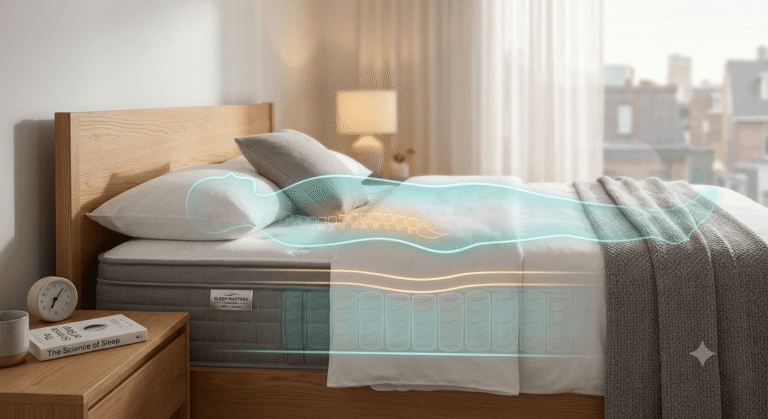 Back & Pain ReliefWhy Your Back Hurts in the Morning: The Ultimate Canadian Mattress Guide for Pain ReliefOct 28, 2026 · 7 min read
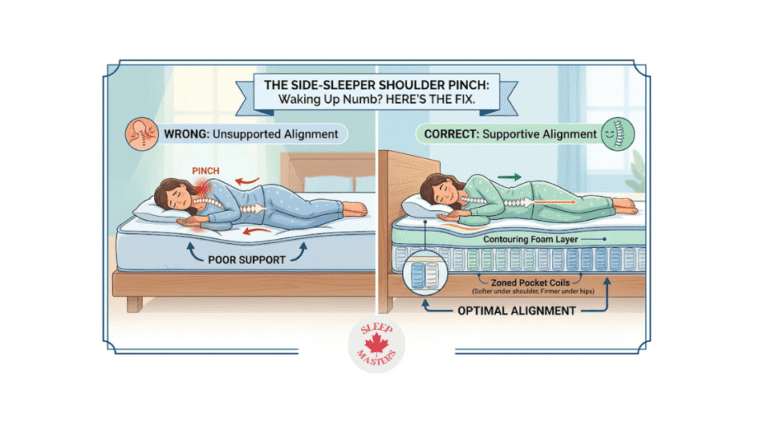 Back & Pain ReliefThe Side-Sleeper Shoulder Pinch: Why Your Mattress Is Numbing Your Arms (And How to Fix It)Oct 28, 2026 · 6 min read
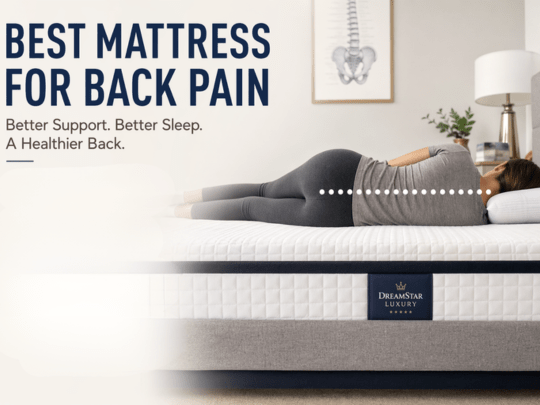 Back & Pain ReliefBest Mattress for Back Pain (2026 Guide)Oct 28, 2026 · 6 min read