 Masters
10 Benefits of a Natural Latex Mattress

In this guide
A natural latex mattress is made from the sap of rubber trees rather than petroleum-based foam, and that single difference drives most of its benefits: it is more responsive and supportive than memory foam, sleeps cooler, resists dust mites and mould, contains no chemical flame retardants, and typically lasts 12 to 20 years. Here are the ten benefits that matter most, and the trade-offs to know before you buy.
Key takeaways
- Natural latex contours like memory foam but springs back instantly, so you sleep on it rather than in it.
- Its open-cell structure makes it one of the coolest-sleeping mattress materials available.
- It is naturally resistant to dust mites, mould and mildew, which makes it a strong choice for allergy sufferers.
- Look for GOLS or OEKO-TEX certification and the words “100% natural latex”; “latex blend” usually means mostly synthetic.
- Expect to pay more upfront than for foam or basic coil mattresses, but the longer lifespan brings the cost per year down.
What is natural latex?
Natural latex is foam made from rubber-tree sap that is whipped with air and baked. Dunlop latex is denser and firmer; Talalay latex is lighter and more consistent. Both are far more durable and breathable than polyurethane memory foam. In a hybrid such as the Organic Meadow series, a layer of natural latex sits over pocket coils so you get the latex feel with the support and airflow of springs.
The top 10 benefits of a natural latex mattress
1. Responsive, buoyant comfort
Latex conforms to your curves, but unlike memory foam it pushes back immediately when you move. You get pressure relief without the stuck-in-the-mattress feeling, and changing position takes no effort.
2. Pressure-point relief
Because latex distributes weight evenly across its surface, it reduces pressure at the shoulders and hips. Side sleepers and people with joint pain often notice the difference in the first week.
3. Healthy spinal alignment
Latex supports where you need it and yields where you do not, so the spine stays in a neutral line in any sleeping position. This is why chiropractors and physiotherapists so often recommend it.
4. Sleeps cool
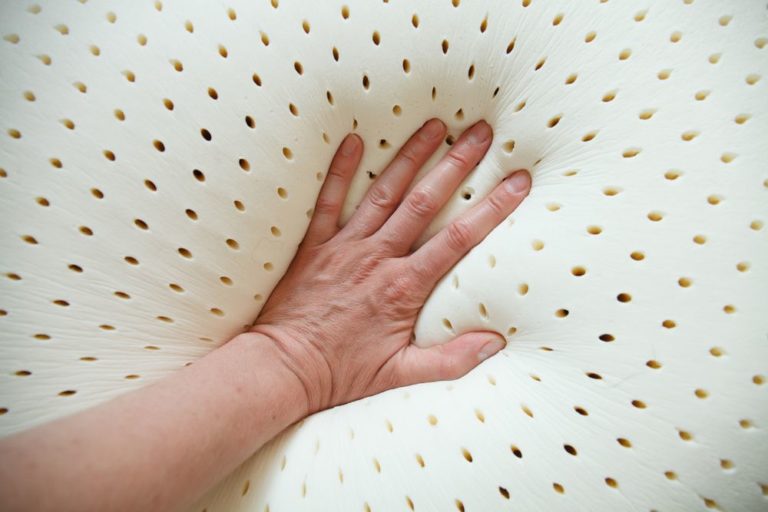
Latex foam is full of tiny pinholes and open cells that let air circulate, and it does not trap body heat the way dense memory foam does. Hot sleepers consistently rate latex among the coolest mattress types.
5. Exceptional durability
Natural latex resists body impressions and sagging far longer than polyurethane foam. A quality latex mattress commonly lasts 12 to 20 years, roughly twice the life of an average memory foam mattress.
6. Hypoallergenic and resistant to dust mites
Latex is naturally inhospitable to dust mites, mould and mildew. For people with allergies or asthma this means fewer night-time triggers without chemical treatments.
7. No harmful chemicals or off-gassing
Certified natural latex is made without chemical flame retardants, formaldehyde or the volatile compounds that give new foam mattresses their smell. Look for GOLS (Global Organic Latex Standard) or OEKO-TEX labels for independent verification.
8. Excellent motion isolation
Latex absorbs movement well, so a partner getting up or rolling over is unlikely to wake you. Combined with pocket coils in a hybrid, motion transfer is minimal.
9. Available in several firmness levels
Latex can be made soft, medium or firm by adjusting its density, and layered latex mattresses can often be re-ordered or flipped. The Organic Meadow line, for example, comes in plush, medium and firm.
10. A more sustainable choice
Rubber trees are a renewable resource tapped for decades without being cut down, and natural latex is biodegradable. If you want to reduce the environmental footprint of your bedroom, it is one of the better mattress materials available.
Natural latex vs. memory foam at a glance
| Natural latex | Memory foam | |
|---|---|---|
| Feel | Buoyant, responsive | Slow-sinking, hugging |
| Temperature | Cool | Can trap heat unless gel-infused |
| Lifespan | 12–20 years | 7–10 years |
| Allergens | Naturally resistant | Resistant, but needs a protector |
| Off-gassing | Minimal | Common when new |
| Price | Higher upfront | Lower upfront |
For a deeper comparison, read our guide to memory foam vs. natural latex.
Things to consider before buying
- Weight: latex mattresses are heavy, so plan on help when rotating them.
- Price: expect to pay more than for a basic foam or coil mattress; the longer lifespan offsets much of that over time.
- Labels: “natural latex blend” or “synthetic latex” are not the same material and do not offer the same durability or purity. Look for 100% natural latex with GOLS or OEKO-TEX certification.
- Feel: if you love the deep sink of memory foam, latex may feel too springy. Try both in person.
Showroom tip: the Organic Meadow Hybrid Medium is our most popular latex mattress because it suits back, side and combination sleepers. If you are heavier or a stomach sleeper, try the Firm; lighter side sleepers usually prefer the Plush.
Natural latex mattresses in our showroom
All three Organic Meadow hybrids pair natural latex with pocket coils and are built in Canada. Dreamstar’s Natural Escape adds a latex comfort layer at a lower price point.
Answer five quick questions and the Mattress Selector will tell you whether latex, memory foam or a pillow top suits how you sleep.
Frequently asked questions
Is a natural latex mattress good for back pain?
Yes. Latex supports the spine in a neutral position while relieving pressure at the hips and shoulders, which is why it is frequently recommended for back pain. Medium or firm latex suits most back-pain sufferers.
Do natural latex mattresses sleep hot?
No. Latex has an open-cell structure that lets air move through it, and it does not retain heat the way memory foam does. It is one of the cooler mattress materials available.
How long does a natural latex mattress last?
A quality natural latex mattress typically lasts 12 to 20 years, significantly longer than memory foam or basic innerspring mattresses.
Are latex mattresses safe for people with latex allergies?
Most people with latex allergies react to the proteins in latex products that touch the skin directly. In a mattress the latex is sealed inside layers of fabric and never contacts skin, so reactions are rare, but anyone with a severe allergy should consult their doctor first.
What is the difference between natural, synthetic and blended latex?
Natural latex comes from rubber-tree sap. Synthetic latex is petroleum-based and less durable. Blended latex mixes the two, often with more synthetic than natural. For the benefits in this guide, choose 100% natural latex with GOLS or OEKO-TEX certification.