 Masters
Memory Foam vs Natural Latex Mattress: Which Is Best?
In this guide
Memory foam hugs your body and slowly moulds to your shape; natural latex contours more lightly and springs back the instant you move. Choose memory foam if you want deep, cradling pressure relief and the best motion isolation at a lower price. Choose natural latex if you sleep hot, change positions often, want a more natural material or want a mattress that lasts 15 years or more. Here is how the two compare on every factor that matters.
Key takeaways
- Feel: memory foam is slow and enveloping; latex is buoyant and responsive.
- Temperature: latex sleeps cooler; traditional memory foam traps heat unless it is gel-infused or open-cell.
- Durability: natural latex typically lasts 12–20 years versus 7–10 for memory foam.
- Price: memory foam is generally cheaper upfront; latex costs more but lasts longer.
- Best compromise: a hybrid with a latex or memory foam comfort layer over pocket coils gives you the feel you prefer with better airflow and edge support.
What is memory foam?
Memory foam is viscoelastic polyurethane foam, first developed for NASA in the 1960s to cushion aircraft seats. It softens in response to body heat and pressure, slowly moulding to your exact shape and then slowly recovering when you get up. Modern versions add gel beads, copper, graphite or open-cell structures to reduce the heat retention the original material was known for.
What is natural latex?
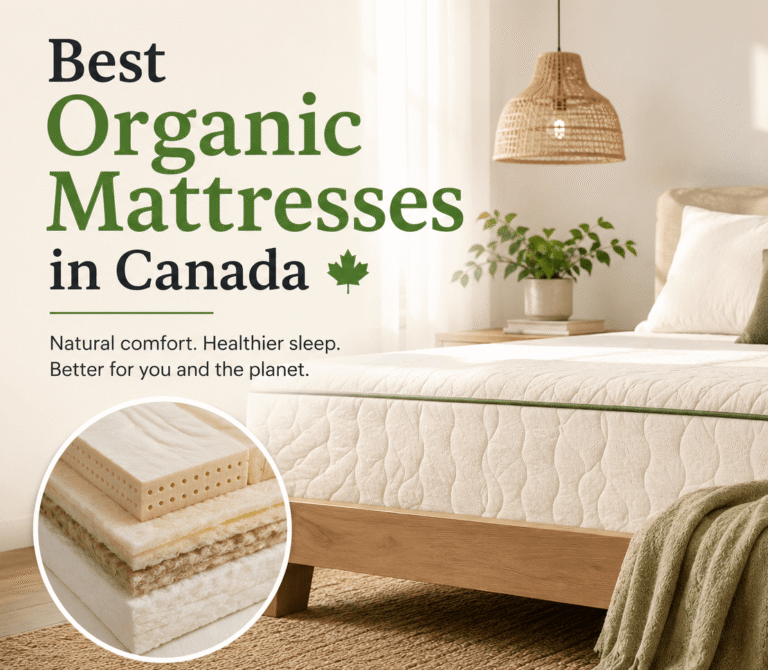
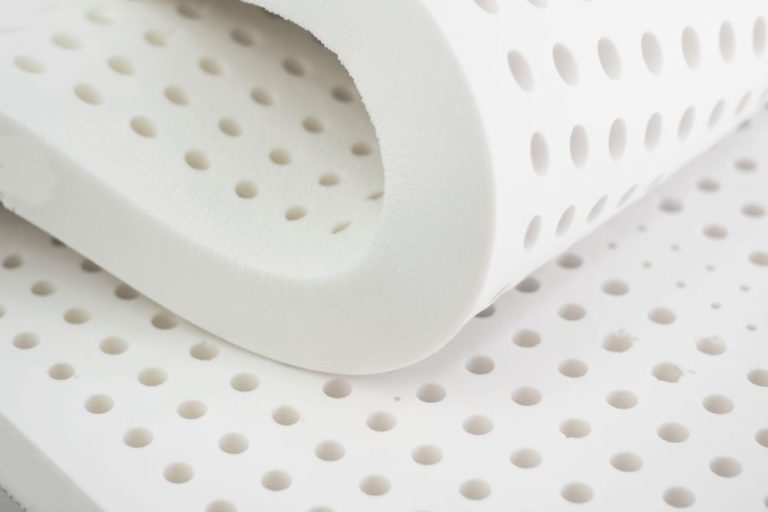
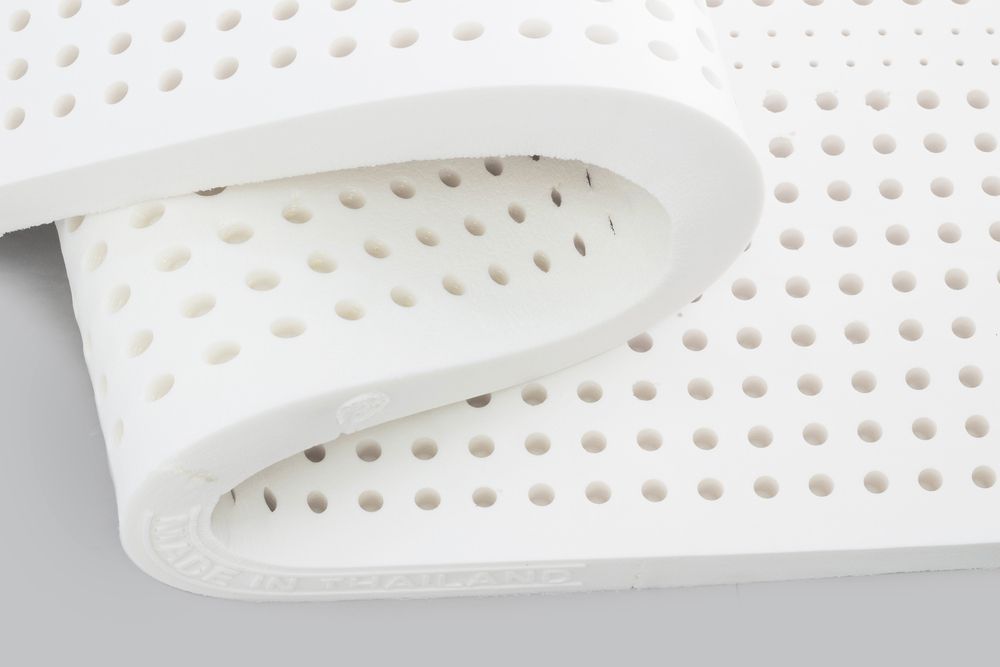
Natural latex is foam made from rubber-tree sap, processed by the Dunlop or Talalay method. A mattress labelled 100% natural latex contains at least 95% natural rubber. It is springy, dense and extremely durable, and it contours to the body in a more general, buoyant way than memory foam. Most latex mattresses sold in Canada, including the Organic Meadow hybrids in our showroom, pair a latex comfort layer with pocket coils.
Memory foam vs. natural latex: side by side
| Factor | Memory foam | Natural latex |
|---|---|---|
| Contouring | Deep, slow, body-hugging | Lighter, buoyant, “on top” feel |
| Responsiveness | Slow to recover; can feel stuck | Instant; easy to change position |
| Support & sag resistance | Good; softens over time | Excellent; very resistant to impressions |
| Motion isolation | Excellent | Very good |
| Temperature | Warm unless gel/open-cell | Cool and breathable |
| Off-gassing | Common when new | Minimal (mild rubber scent) |
| Allergens | Resistant | Naturally resistant to dust mites and mould |
| Lifespan | 7–10 years | 12–20 years |
| Weight | Moderate | Heavy |
| Typical queen price | $600–$2,000 | $1,200–$3,500 |
Comparing the factors that matter most
Conforming feel
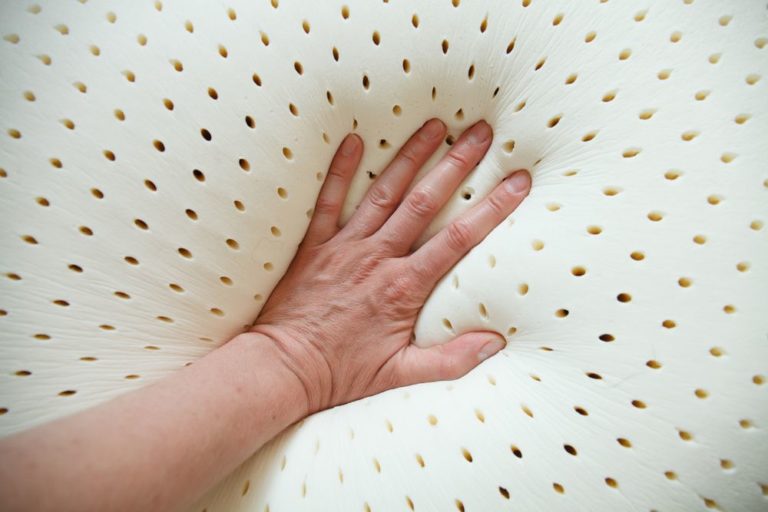
Memory foam wins for people who want to feel cradled. It fills in every curve, which side sleepers with shoulder or hip pain often love. Latex also relieves pressure, but it supports you from underneath rather than wrapping around you, so you sleep on the mattress rather than in it. If you dislike the sensation of sinking, latex is the better choice.
Support and durability
Both support the spine well when the firmness matches your body. Over time, latex keeps its shape far better; memory foam gradually softens and can develop body impressions, especially lower-density foams. If you are heavier than average or plan to keep the mattress for well over a decade, latex is the safer bet.
Motion isolation
Memory foam is the best material available for absorbing movement, which is why couples who are easily woken often prefer it. Latex is slightly bouncier and transmits a little more motion, though in a pocket-coil hybrid the difference is small.
Temperature
This is the clearest difference. Dense memory foam traps heat; gel infusions and open-cell designs help, but most hot sleepers still find latex cooler because air moves freely through its open structure. If you wake up warm, lean toward latex or a latex hybrid.
Cost
Memory foam is cheaper to produce, so you will find good memory foam mattresses from about $600 in queen and premium models under $2,000. Natural latex is a premium material; expect $1,200 and up. Spread over its longer life, latex often costs no more per year of use.
Health and environment
Natural latex is renewable, biodegradable and made without the chemical blowing agents used in polyurethane foam. Look for GOLS or OEKO-TEX certification. Memory foam has improved; CertiPUR-US certified foams are made without ozone depleters, heavy metals or formaldehyde, and off-gassing fades within a few days.
Which should you choose?
- Choose memory foam if: you want a deep, hugging feel, you share the bed with a restless partner, you sleep cool naturally, or your budget is under about $1,200.
- Choose natural latex if: you sleep hot, you change positions often, you have allergies, you want a natural material, or you want the longest-lasting mattress available.
- Consider a hybrid if: you want either feel with the airflow, bounce and edge support of pocket coils. Most of the memory foam and latex mattresses we sell are hybrids for exactly this reason.
Showroom tip: lie on each for five minutes, then roll over. If rolling takes effort on the memory foam, latex will feel more natural to you. If the latex feels too springy, you are a memory foam sleeper.
Memory foam and latex mattresses in our showroom
Browse all memory foam mattresses and natural latex mattresses, or read what to look for in a memory foam mattress.
Answer five quick questions and the Mattress Selector will tell you which material and firmness suit how you sleep.
Frequently asked questions
Which is better for back pain, memory foam or latex?
Both can relieve back pain when the firmness is right. Memory foam offers deeper contouring for side sleepers; latex offers firmer, more resilient support that back and stomach sleepers often prefer. Medium-firm is the sweet spot for most back-pain sufferers in either material.
Does latex sleep cooler than memory foam?
Yes. Latex has an open-cell structure that lets air circulate, while dense memory foam retains body heat. Gel-infused memory foam narrows the gap but rarely closes it.
Which lasts longer?
Natural latex. A quality latex mattress typically lasts 12 to 20 years; memory foam averages 7 to 10 years before softening noticeably.
Is memory foam or latex better for couples?
Memory foam isolates motion slightly better, but latex is easier to move on and sleeps cooler. Many couples settle on a pocket-coil hybrid with either material on top.
Why is latex more expensive?
Natural latex is harvested from rubber trees and processed in smaller volumes than petroleum-based foam, so raw material and manufacturing costs are higher. Its longer lifespan offsets much of the difference over time.